
Virus Bulletin
Copyright © 2026 Virus Bulletin
In the Q2 2026 VBSpam test – which forms part of Virus Bulletin's continuously running security product test suite – we measured the performance of a number of email security solutions against various streams of wanted, unwanted and malicious emails. Half of the solutions we tested opted to be included in the public test, the rest opting for private testing (all details and results remaining unpublished). The solutions tested publicly – and included in this report – were ten full email security solutions and one open-source solution.
This test set highlighted how email threats increasingly hide behind ordinary business workflows and reputable delivery infrastructure. The most notable samples we observed included a Danish domain-suspension lure sent through Atlassian Jira, a purchase-order attack that originated from a likely compromised Microsoft 365 account and used a linked document, and an HR salary-adjustment message whose Word attachment led to a SilverFox payload chain. In each case, the malicious intent was pushed beyond the initial email, relying on authenticated senders, familiar notification formats and external payload staging to make gateway-level detection harder.
Despite this, most products maintained very high levels of protection across spam, malware and phishing, with several achieving near-perfect results and no false positives – though a smaller number of lower-scoring products did continue to struggle with these multi-stage, infrastructure-abuse techniques.
For some additional background to this report, the table and map below show the geographical distribution (based on sender IP address) of the spam emails seen in the test1. (Note: these statistics are relevant only to the spam samples we received during the test period.)
| # | Sender's IP country | Percentage of spam |
| 1 | United States | 41.26% |
| 2 | China | 14.84% |
| 3 | Japan | 5.37% |
| 4 | Russian Federation | 3.76% |
| 5 | Germany | 2.27% |
| 6 | United Kingdom | 2.07% |
| 7 | Netherlands | 1.01% |
| 8 | Czech Republic | 0.95% |
| 9 | Asia/Pacific region | 0.93% |
| 10 | Ukraine | 0.83% |
Top 10 countries from which spam was sent.
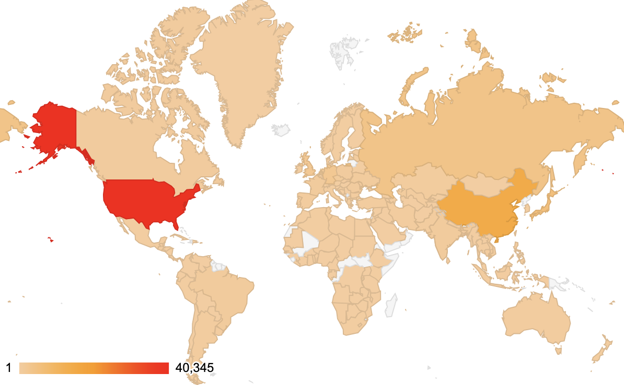
Geographical distribution of spam based on sender IP address.
This test was executed in accordance with the AMTSO Standard of the Anti-Malware Testing Standards Organization. The compliance status can be verified on the AMTSO website:
This message is a high-risk phishing email delivered through a legitimate Atlassian Jira Service Management notification flow. The attacker impersonates Punktum dk A/S and uses a Danish domain-suspension lure to pressure the recipient into 'reactivating' their .dk domain through a malicious systeme[.]io landing page.
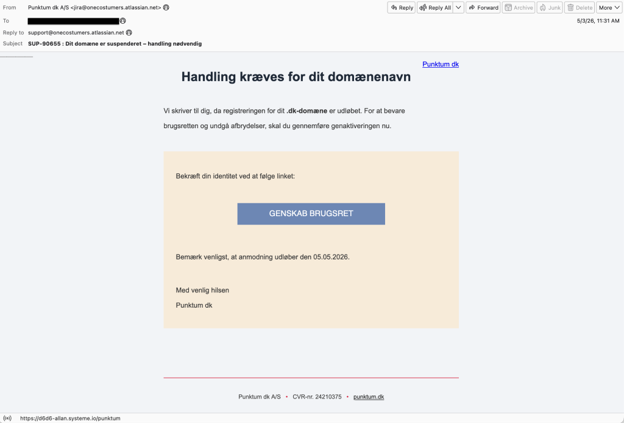 Phishing email impersonating Jira ticket notification.
The message is particularly challenging for security solutions because it inherits trust from Atlassian and Amazon SES infrastructure, passes DKIM for atlassian[.]net, and contains normal Jira notification headers, while the actual phishing content is embedded inside the service-desk message body.
This combination of valid authentication, trusted SaaS delivery and a low-reputation external CTA enables the message to bypass filters that rely heavily on sender reputation and platform-level trust.
This email is a high-risk phishing message sent from what appears to be a legitimate Microsoft 365-hosted business account, Porcher Adams <[email protected]>. The message uses a simple purchase-order lure with the subject Emailing: Customer PO and asks the recipient to process a purchase order, attaching a Word document named Purchase_Order.docx.
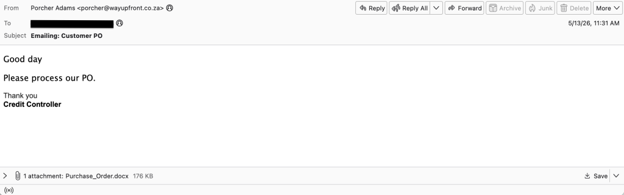
Phishing sent via compromised M365 account.
The attachment is not macro-enabled, but it contains an external hyperlink labelled VIEW PURCHASE ORDER HERE, pointing to hxxps://organisationdesign[.]github[.]io/labtechgroup/, which is unrelated to the sender and serves as the next-stage phishing page2.
This threat is challenging for security solutions because the message carries strong legitimacy signals: it was sent through Microsoft 365 infrastructure, SPF/DKIM/DMARC passed for wayupfront.co.za, Microsoft classified it with low spam confidence (SCL:1, SFV:NSPM), and the email body itself is short, plain and business-like. The malicious element is pushed into an attached DOCX and then into an external link within that document, reducing the chance that content filters focused on the email body alone will detect the threat.
This email is a high-risk malware delivery attempt using an HR-themed salary and position adjustment notice to push the recipient toward an attached Word document. The message is sent from a consumer Outlook account and uses a generic human resources display name, while the attachment contains a link to an external payload site rather than having malicious code directly embedded.
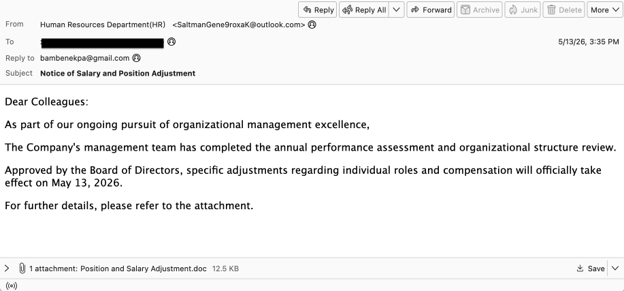 Malware sample luring to delivering ValleyRAT.
The attached Word document links to an external landing page that downloads a ZIP archive, 47cfcea4be4f89d9a25fabd7cd30e5469d7de839d6bded1a7f6760eec913a60a, which after extraction and execution leads to a ValleyRAT infection3 and contacts akyv188[.]club.
This makes the attack challenging for security solutions to detect, as the email itself is sparse, authenticated through Microsoft infrastructure, and the malicious behaviour is only exposed after the user opens the attachment and follows the embedded link.
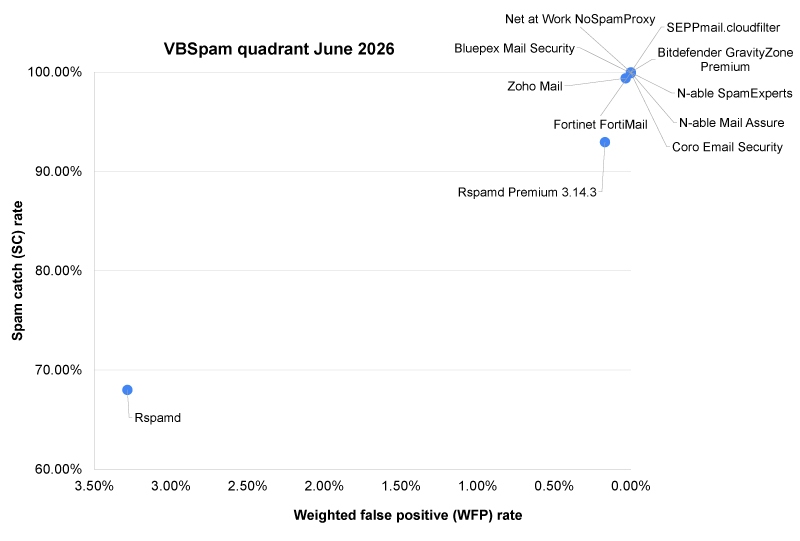
Of the participating full solutions, one (Zoho Mail) achieved a VBSpam award, while eight others were awarded a VBSpam+ certification: Bitdefender GravityZone Premium, Bluepex Mail Security, Coro Email Security, FortiMail, N-able Mail Assure, N-able SpamExperts, Net at Work NoSpamProxy and SEPPmail.cloudfilter.
(Note: since, for a number of products, catch rates and/or final scores were very close to, whilst remaining a fraction below, 100%, we quote all the spam-related scores with three decimal places.)
|
SC rate: 99.982%
|
 |
Bitdefender GravityZone Premium delivered an excellent performance in this test, combining a spam catch rate of 99.982% with no false positives and a final score of 99.982. It achieved a perfect malware catch rate, a phishing catch rate of 99.940%, and turned in strong results across all three spam feeds, while maintaining consistently fast delivery speeds throughout the test.
|
SC rate: 99.898%
|
|
Bluepex Mail Security produced a strong showing, with a spam catch rate of 99.898%, no false positives and a final score of 99.898. Its malware and phishing detection rates were both high, results across the Project Honey Pot, Abusix and MXMailData feeds were consistently solid, and all speed measurements remained comfortably in the green.
|
SC rate: 99.925%
|
|
Coro Email Security performed well overall, achieving a spam catch rate of 99.925% with no false positives and a final score of 99.925. Malware and phishing catch rates were both high, though the Abusix feed proved slightly more challenging than the other streams, and while delivery speeds started strongly, later measurements moved into the yellow bracket.
|
SC rate: 99.950%
|
|
Fortinet's FortiMail turned in an excellent performance, with a spam catch rate of 99.950%, no false positives and a final score of 99.950. With perfect malware detection, a phishing catch rate of 99.950%, very strong feed‑by-feed results and green speed measurements throughout, it combined accuracy with consistently prompt delivery.
|
SC rate: 99.974%
|
|
N-able Mail Assure achieved excellent results, combining a spam catch rate of 99.974% with zero false positives and a final score of 99.974. Malware and phishing detection were both very strong, the Project Honey Pot feed was handled particularly well. Its strong performance was backed up by fast delivery speeds across the board.
|
SC rate: 99.974%
|
|
N-able SpamExperts matched its stablemate, also posting a spam catch rate of 99.974%, no false positives and a final score of 99.974. Its malware and phishing catch rates were high, feed-level performance was consistently strong, and all speed measurements remained in the green, resulting in a well-balanced overall showing.
|
SC rate: 99.988%
|
|
Net at Work NoSpamProxy was one of the strongest performers in the test, with a spam catch rate of 99.988%, no false positives and a final score of 99.988. It achieved perfect malware detection, an excellent phishing catch rate of 99.990%, strong results across all spam feeds and consistently fast delivery times.
|
SC rate: 68.013%
|
Rspamd had a difficult test, with a spam catch rate of 68.013%, a false positive rate of 3.31%, and a final score of 51.594. Malware and phishing detection both lagged well behind the leading products, with the MXMailData feed proving particularly challenging, and although delivery speeds were consistently fast, accuracy levels were not competitive.
|
SC rate: 92.960%
|
Rspamd Premium 3.14.3 improved substantially on the open-source version, reaching a spam catch rate of 92.960% and a final score of 92.118, though the false positive rate of 0.17% affected the overall result. Phishing detection slightly outperformed malware detection, the Abusix feed was handled especially well, and speeds remained solid throughout.
|
SC rate: 99.982%
|
|
SEPPmail.cloudfilter delivered excellent results, with a spam catch rate of 99.982%, no false positives and a final score of 99.982. Feed-by-feed performance was uniformly strong, phishing and malware detection were both close to perfect, and although the final speed measurement slipped into the yellow bracket, delivery was otherwise consistently fast.
|
SC rate: 99.385%
|
 |
Zoho Mail achieved a respectable spam catch rate of 99.385% and a final score of 99.217, with strong malware detection and no false positives on legitimate mail. However, a newsletter false positive rate of 3.8% and slightly weaker performance on the Abusix and phishing streams weighed on the overall result, while later speed measurements also fell into the yellow.
| True negatives | False positives | FP rate | False negatives | True positives | SC rate | Final score | VBSpam | |
| Bitdefender GravityZone Premium | 1177 | 0 | 0.00% | 17.6 | 97741 | 99.982% | 99.982 |  |
| Bluepex Mail Security | 1177 | 0 | 0.00% | 100.2 | 97658.4 | 99.898% | 99.898 | |
| Coro Email Security | 1177 | 0 | 0.00% | 73.4 | 97685.2 | 99.925% | 99.925 | |
| Fortinet FortiMail | 1177 | 0 | 0.00% | 48.4 | 97710.2 | 99.950% | 99.950 | |
| N-able Mail Assure | 1177 | 0 | 0.00% | 25 | 97733.6 | 99.974% | 99.974 | |
| N-able SpamExperts | 1177 | 0 | 0.00% | 25 | 97733.6 | 99.974% | 99.974 | |
| Net at Work NoSpamProxy | 1177 | 0 | 0.00% | 12 | 97746.6 | 99.988% | 99.988 | |
| Rspamd | 1138 | 39 | 3.31% | 31269.8 | 66488.8 | 68.013% | 51.594 | |
| Rspamd Premium 3.14.3 | 1175 | 2 | 0.17% | 6882.6 | 90876 | 92.960% | 92.118 | |
| SEPPmail.cloudfilter | 1177 | 0 | 0.00% | 17.2 | 97741.4 | 99.982% | 99.982 | |
| Zoho Mail | 1177 | 0 | 0.00% | 600.8 | 97157.8 | 99.385% | 99.217 |  |
| Newsletters | Malware | Phishing | Project Honey Pot | Abusix | MXMailData | STDev† | |||||||
| False positives | FP rate | False negatives | SC rate | False negatives | SC rate | False negatives | SC rate | False negatives | SC rate | False negatives | SC rate | ||
| Bitdefender GravityZone Premium | 0 | 0.0% | 0 | 100.000% | 7 | 99.940% | 7.2 | 99.991% | 10.4 | 99.920% | 0 | 100.000% | 0.15 |
| Bluepex Mail Security | 0 | 0.0% | 2 | 99.940% | 14 | 99.870% | 88.2 | 99.886% | 9 | 99.931% | 3 | 99.960% | 0.24 |
| Coro Email Security | 0 | 0.0% | 1 | 99.970% | 18 | 99.840% | 37.4 | 99.952% | 35 | 99.730% | 1 | 99.990% | 0.26 |
| Fortinet FortiMail | 0 | 0.0% | 0 | 100.000% | 5 | 99.950% | 42.4 | 99.945% | 6 | 99.954% | 0 | 100.000% | 0.16 |
| N-able Mail Assure | 0 | 0.0% | 1 | 99.970% | 5 | 99.950% | 2 | 99.997% | 22 | 99.830% | 1 | 99.990% | 0.14 |
| N-able SpamExperts | 0 | 0.0% | 1 | 99.970% | 5 | 99.950% | 2 | 99.997% | 22 | 99.830% | 1 | 99.990% | 0.14 |
| Net at Work NoSpamProxy | 0 | 0.0% | 0 | 100.000% | 1 | 99.990% | 7.8 | 99.990% | 4.2 | 99.968% | 0 | 100.000% | 0.13 |
| Rspamd | 0 | 0.0% | 1309 | 62.180% | 4973 | 54.810% | 22441 | 70.911% | 4814.8 | 62.853% | 4014 | 47.540% | 10.77 |
| Rspamd Premium 3.14.3 | 0 | 0.0% | 292 | 91.560% | 645 | 94.140% | 5901 | 92.351% | 588.6 | 95.459% | 393 | 94.860% | 5.81 |
| SEPPmail.cloudfilter | 0 | 0.0% | 1 | 99.970% | 3 | 99.970% | 14.2 | 99.982% | 1 | 99.992% | 2 | 99.970% | 0.11 |
| Zoho Mail | 2 | 3.8% | 1 | 99.970% | 53 | 99.520% | 486.4 | 99.369% | 102.4 | 99.210% | 12 | 99.840% | 0.69 |
† The standard deviation of a product is calculated using the set of its hourly spam catch rates.
| Speed | ||||
| 10% | 50% | 95% | 98% | |
| Bitdefender GravityZone Premium |  |
|
|
|
| Bluepex Mail Security | |
|
|
|
| Coro Email Security | |
|
 |
|
| Fortinet FortiMail | |
|
|
|
| N-able Mail Assure | |
|
|
|
| N-able SpamExperts | |
|
|
|
| Net at Work NoSpamProxy | |
|
|
|
| Rspamd | |
|
|
|
| Rspamd Premium 3.14.3 | |
|
|
|
| SEPPmail.cloudfilter | |
|
|
|
| Zoho Mail | |
|
|
|
|
0-30 seconds | |
30 seconds to two minutes |  |
two minutes to 10 minutes |  |
more than 10 minutes |
| Products ranked by final score | |
| Net at Work NoSpamProxy | 99.988 |
| SEPPmail.cloudfilter | 99.982 |
| Bitdefender GravityZone Premium | 99.982 |
| N-able Mail Assure | 99.974 |
| N-able SpamExperts | 99.974 |
| Fortinet FortiMail | 99.950 |
| Coro Email Security | 99.925 |
| Bluepex Mail Security | 99.898 |
| Zoho Mail | 99.217 |
| Rspamd Premium 3.14.3 | 92.118 |
| Rspamd | 51.594 |
| Hosted solutions | Anti-malware | IPv6 | DKIM | SPF | DMARC | Multiple MX-records | Multiple locations |
| Bluepex Mail Security | ClamAV & Bitdefender | √ | √ | √ | √ | √ | √ |
| Coro Email Security | Coro | √ | √ | √ | √ | ||
| N-able Mail Assure | N-able Mail Assure | √ | √ | √ | √ | ||
| N-able SpamExperts | SpamExperts | √ | √ | √ | √ | ||
| Net at Work NoSpamProxy | 32Guards & NoSpamProxy | √ | √ | √ | √ | √ | |
| Rspamd Premium | ClamAV | √ | √ | √ | √ | √ | |
| SEPPmail.cloudfilter | SEPPmail, ClamAV & ESET | √ | √ | √ | √ | √ | √ |
| Zoho Mail | Zoho | √ | √ | √ | √ | √ |
| Local solutions | Anti-malware | IPv6 | DKIM | SPF | DMARC | Interface | |||
| CLI | GUI | Web GUI | API | ||||||
| Bitdefender GravityZone Premium | Bitdefender | √ | √ | √ | √ | ||||
| Fortinet FortiMail | Fortinet | √ | √ | √ | √ | √ | √ | √ | |
| Rspamd | None | √ | |||||||
The full VBSpam test methodology can be found at https://www.virusbulletin.com/testing/vbspam/vbspam-methodology/vbspam-methodology-ver30-1/.
The test ran for 16 days, from 12am on 2 May to 12am on 18 May 2026 (GMT).
The test corpus consisted of 99,011 emails. 97,781 of these were spam, 77,157 of which were provided by Project Honey Pot, 12,972 were provided by Abusix, and the remaining 7,651 spam emails were provided by MXMailData. There were 1,177 legitimate emails ('ham') and 53 newsletters (a category that includes various kinds of commercial and non-commercial opt-in mailings).
28 emails in the spam corpus were considered 'unwanted' and were included with a weight of 0.2; this explains the non-integer numbers in some of the tables.
Moreover, 3,461 emails from the spam corpus were found to contain a malicious attachment while 11,004 contained a link to a phishing or malware site; though we report separate performance metrics on these corpora, it should be noted that these emails were also counted as part of the spam corpus.
Emails were sent to the products in real time and in parallel. Though products received the email from a fixed IP address, all products had been set up to read the original sender's IP address as well as the EHLO/HELO domain sent during the SMTP transaction, either from the email headers or through an optional XCLIENT SMTP command4.
For those products running in our lab, we all ran them as virtual machines on a VMware ESXi cluster. As different products have different hardware requirements – not to mention those running on their own hardware, or those running in the cloud – there is little point comparing the memory, processing power or hardware the products were provided with; we followed the developers' requirements and note that the amount of email we receive is representative of that received by a small organization.
Although we stress that different customers have different needs and priorities, and thus different preferences when it comes to the ideal ratio of false positive to false negatives, we created a one-dimensional ‘final score’ to compare products. This is defined as the spam catch (SC) rate minus five times the weighted false positive (WFP) rate. The WFP rate is defined as the false positive rate of the ham and newsletter corpora taken together, with emails from the latter corpus having a weight of 0.2:
WFP rate = (#false positives + 0.2 * min(#newsletter false positives , 0.2 * #newsletters)) / (#ham + 0.2 * #newsletters)
while in the spam catch rate (SC), emails considered ‘unwanted’ (see above) are included with a weight of 0.2.
The final score is then defined as:
Final score = SC - (5 x WFP)
In addition, for each product, we measure how long it takes to deliver emails from the ham corpus (excluding false positives) and, after ordering these emails by this time, we colour-code the emails at the 10th, 50th, 95th and 98th percentiles:
|
(green) = up to 30 seconds |
|
(yellow) = 30 seconds to two minutes |
|
(orange) = two to ten minutes |
|
(red) = more than ten minutes |
Products earn VBSpam certification if the value of the final score is at least 98 and the ‘delivery speed colours’ at 10 and 50 per cent are green or yellow and that at 95 per cent is green, yellow or orange.
Meanwhile, products that combine a spam catch rate of 99.5% or higher with a lack of false positives, no more than 2.5% false positives among the newsletters and ‘delivery speed colours’ of green at 10 and 50 per cent and green or yellow at 95 and 98 per cent earn a VBSpam+ award.
1 For 8,762 spam samples (8.96% of the total) we were unable to find data about geographical location based on IP address.
2 https://app.any.run/tasks/8761b1f3-4bbb-4654-a9c9-5d13c43ff904.
3 https://www.proofpoint.com/us/blog/threat-insight/ta4922-suspected-chinese-crime-group-going-global.
4 http://www.postfix.org/XCLIENT_README.html.



